How FStaff Scaled Driver Recruiting Across 14 Markets Without Adding Recruiters
FStaff recruits drivers across 14 markets. With Asendia AI phone-screening its 60-80 daily applications and writing results to Tenstreet, it handles that volume without adding recruiters, at a cost below a single recruiter's salary.
FStaff recruits drivers across 14 markets and matches them with open roles near where they live. Applications arrive at a rate of 60-80 a day, and under its old process one recruiter reviewed and followed up on each of them by hand, so any growth in volume meant another recruiting hire. FStaff now has Asendia AI phone-screen every completed application and write the results to its Tenstreet ATS, which lets the company handle that volume without adding recruiters, at a cost well below a single recruiter's salary.
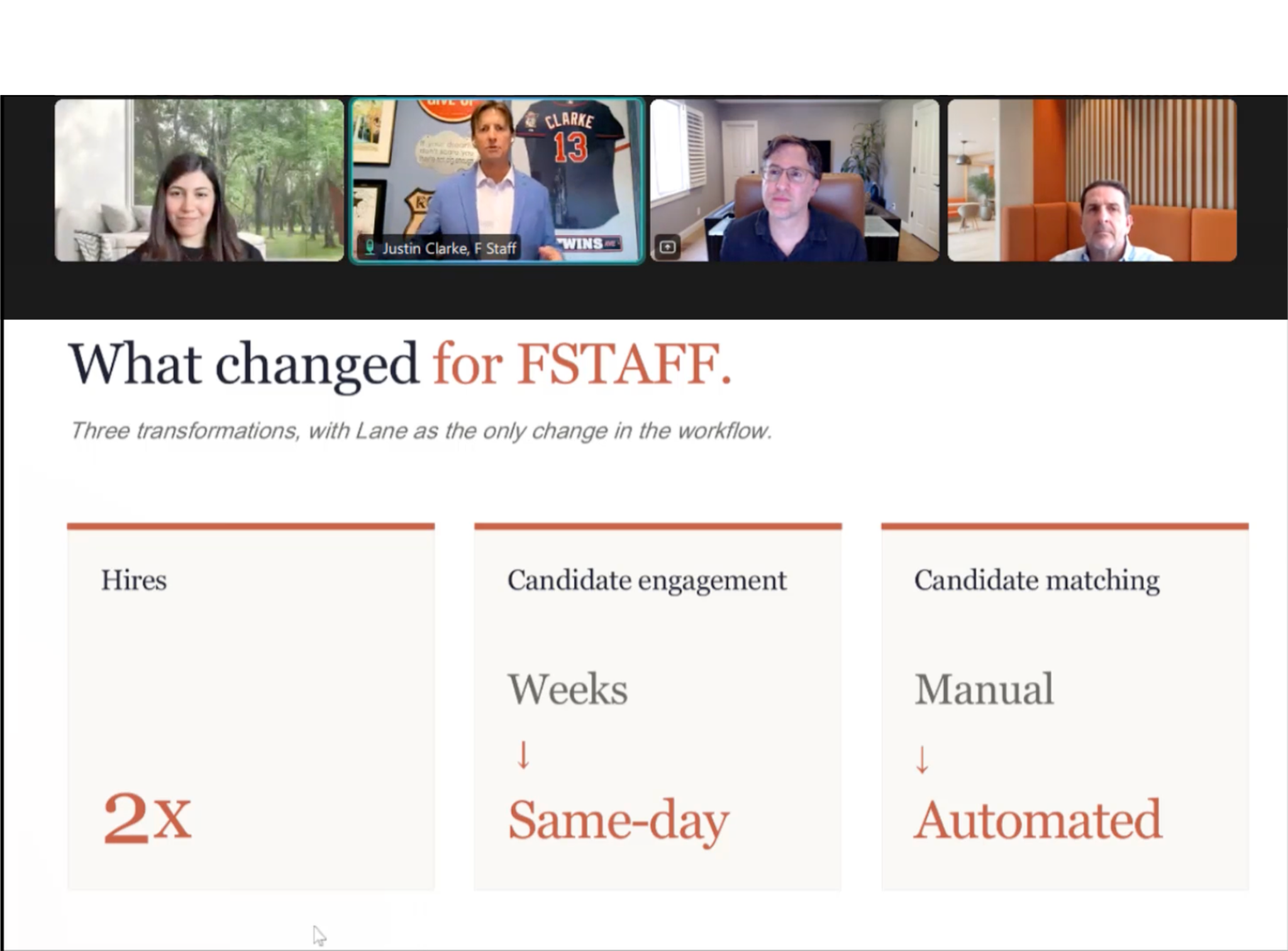
What changed for FStaff
- AI screening costs significantly less than one recruiter's salary, so rising application volume no longer has to be met with new recruiting hires.
- The 60-80 applications that arrive each day are screened by an AI phone interview instead of manual recruiter review, removing the main bottleneck in FStaff's process.
- Location-based matching runs automatically across all 14 markets, replacing the manual work of fitting each candidate to an open role.
- Candidates are qualified in minutes rather than hours, and they get immediate feedback and clear next steps.
One recruiter as the limit on growth
FStaff's business depends on volume and speed. Candidates quick-apply through Indeed with basic information, and FStaff sends SMS nudges to get them to complete a full application. Under the old process, a single recruiter then reviewed each application for disqualifying factors such as safety history, employment gaps and location. Qualified candidates got a call to verify their details and discuss job preferences, and the recruiter matched them by hand to available roles across FStaff's markets.
At 60-80 applications a day, that recruiter set the ceiling on how much FStaff could take on. The obvious fix, hiring more recruiters, would have raised costs in line with volume. Leadership wanted the opposite: to grow without adding headcount, while keeping the experience good for the drivers applying.
How the AI phone screen fits the Tenstreet workflow
When a candidate completes a full application, Asendia's AI calls them for a phone interview. The conversation starts with knockout questions on location, required certifications and employment history, then covers career goals and job preferences, availability and schedule flexibility, and interest in specific roles or markets. Every applicant is asked the same questions, which gives FStaff a consistent evaluation from one candidate to the next.
Those answers feed location-based matching. Drivers often don't know which of FStaff's 14 markets would suit them best, so Asendia matches each one with open roles nearby rather than leaving that step to a recruiter.
All of it lands in Tenstreet automatically. The recruiting team keeps working in the ATS it already had, with no manual data entry between systems.
Where recruiter time goes next
With first-round screening handled, FStaff's leadership is moving its recruiting team toward work that needs a person: building relationships with drivers, negotiation and placement support.
Ready to transform your hiring strategy? Schedule a Demo with our founders today!: https://asendia.ai/talk-to-founders

Badis Zormati
Co-Founder, Asendia AI
Ready to transform your global recruitment operations with intelligent AI solutions?
Schedule a Demo